

The Hutsulka dance is one of the most iconic folk expressions of the mountainous regions of western Ukraine. Rhythmic, lively and deeply rooted in Hutsul culture, it reflects the strength, freedom and festive spirit of the Carpathian peoples.
Historically, these dances accompanied:
◆ Village festivals
◆ Weddings
◆ Seasonal celebrations
◆Community gatherings
Dance was an integral part of social life. It not only provided an opportunity to celebrate, but also to strengthen the bonds between members of the community.
Like many Ukrainian dances, the Hutsulka combines ancient, ritualistic and festive influences.
Dancing characteristics
The Hutsulka dance is distinguished by its energetic style and dynamic movements.
Fast and lively rhythm
The music is lively, often performed with traditional instruments such as:
◆ The trembita (long horn of the Carpathians)
◆ The tsymbaly (cymbalum)
◆ The violin
◆ The accordion
Complex footwork
The dancers perform:
◆ Quick steps
◆ Stamping one's feet
◆ Light jumps
◆ Lively rotations
Alternating between grace and power
Men demonstrate agility and endurance, while women bring fluidity and elegance.
Group and circle dancing
Often practised in groups, it promotes interaction and synchronisation.
Improvisation
Certain sequences allow dancers to express their personal style.
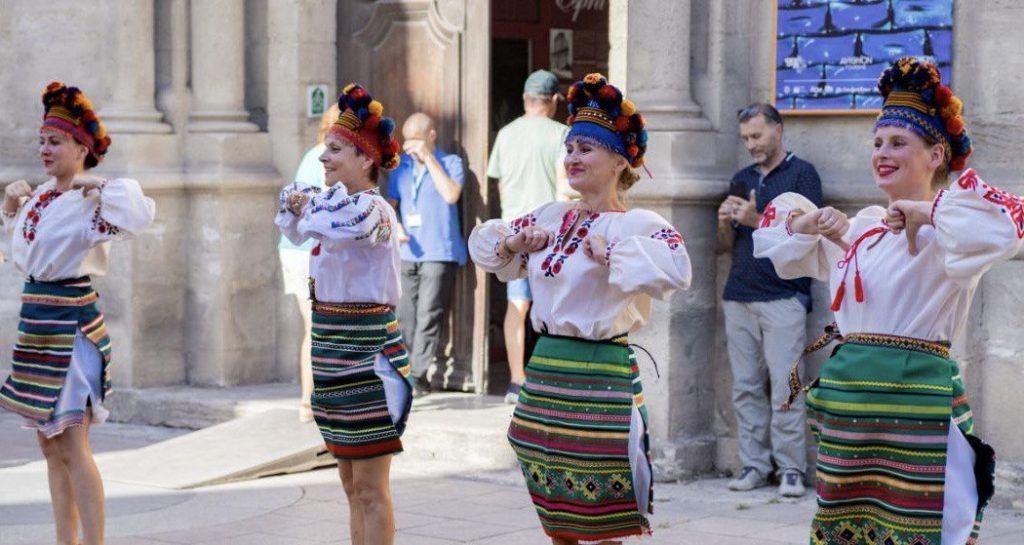
Traditional costumes
Costumes play an essential role in the aesthetics of dance.
Men:
◆ Embroidered shirts
◆ Sheepskin waistcoats
◆ Wide belts
◆ Leather boots
Women:
◆ Colourful dresses
◆ Embroidered aprons
◆ Scarves or crowns
◆ Traditional necklaces
The patterns and colours reflect the rich craftsmanship of the Hutsuls.
The cultural significance
The Houtsulka dance has a strong symbolic dimension.
Expression of freedom
It evokes life in the mountains, close to nature.
Regional identity
It celebrates Hutsul culture and its distinctive features.
Joy and celebration
It accompanies festive and community occasions.
Transfer of assets
It helps to preserve ancestral gestures, rhythms and traditions.
Dance thus becomes a vehicle for memory and cultural continuity.
The Hutsulka dance today
Today, Hutsulka remains very much alive.
Folk festivals
It is regularly performed at cultural events in Ukraine and abroad.
Traditional dance ensembles
Professional and amateur troupes keep this tradition alive.
Artistic revival
Contemporary choreographers reinterpret its codes in modern creations.
Cultural symbol
It embodies the diversity and richness of Ukrainian folklore.
The Hutsulka dance is much more than a performance: it is the breath of the Carpathians, the energy of the Hutsul people and a celebration of a vibrant tradition.