


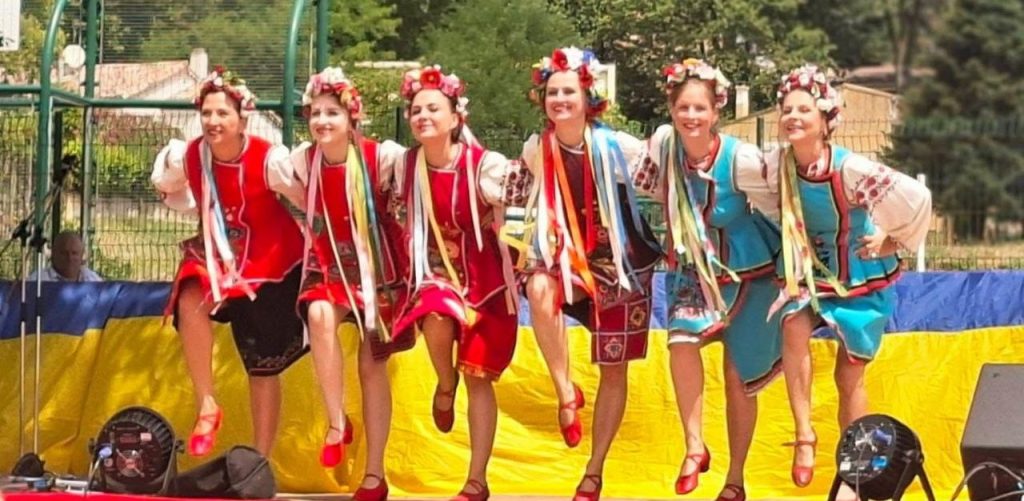

The Hopak dance is one of Ukraine's most vibrant cultural expressions. Often referred to as the ‘Ukrainian national dance’, it combines energy, agility and tradition, embodying the courageous and joyful spirit of the Ukrainian people.
Origins and history
The Hopak has its roots in the war dances of the Cossacks of Ukraine in the 17th century. Originally, it was performed by men to celebrate victory after a battle or to show their bravery and agility. The acrobatic and rapid movements, such as somersaults and high kicks, reflected the strength and skill of the warriors.
Over time, the dance became popular among Ukrainian villages and communities, and female variations were incorporated, emphasising grace and lightness. Today, the Hopak is a group dance that can be performed solo, in pairs or in groups.
Dancing characteristics
The Hopak dance is distinguished by several typical elements:
◆Traditional costumes : men wears embroidered shirts, red belts and boots, while women wear colourful dresses and flower crowns.
◆Spectacular jumps: dancers perform acrobatic jumps, often with a full turn or a high kick.
◆Fast, dynamic movements: transitions are fluid but intense, with quick steps and turns.
◆Interaction between dancers: dancers can compete against each other in competitive, often improvised movements.
Hopak is as much a visual spectacle as it is a demonstration of technique, requiring endurance, flexibility and precision.
The cultural significance
Beyond its artistic dimension, the Hopak is a symbol:
◆Freedom and courage: the legacy of the Cossacks who defended their territory.
◆National identity: it unites Ukrainian communities around their traditions.
◆Joy and celebration: it often accompanies parties, weddings and cultural events.
Dance thus became a tool for cultural preservation, particularly during periods of foreign domination, when it served to strengthen the sense of belonging and national pride.
The Hopak today
Today, the Hopak is performed on international stages and in folk shows, as well as in dance schools and cultural festivals. Famous troupes, such as the National Academic Ensemble of Ukraine, have helped to popularise this dance around the world.
In addition to its festive dimension, the Hopak dance also inspires contemporary creations, blending folklore and modern techniques, proving that this tradition remains alive and dynamic.